

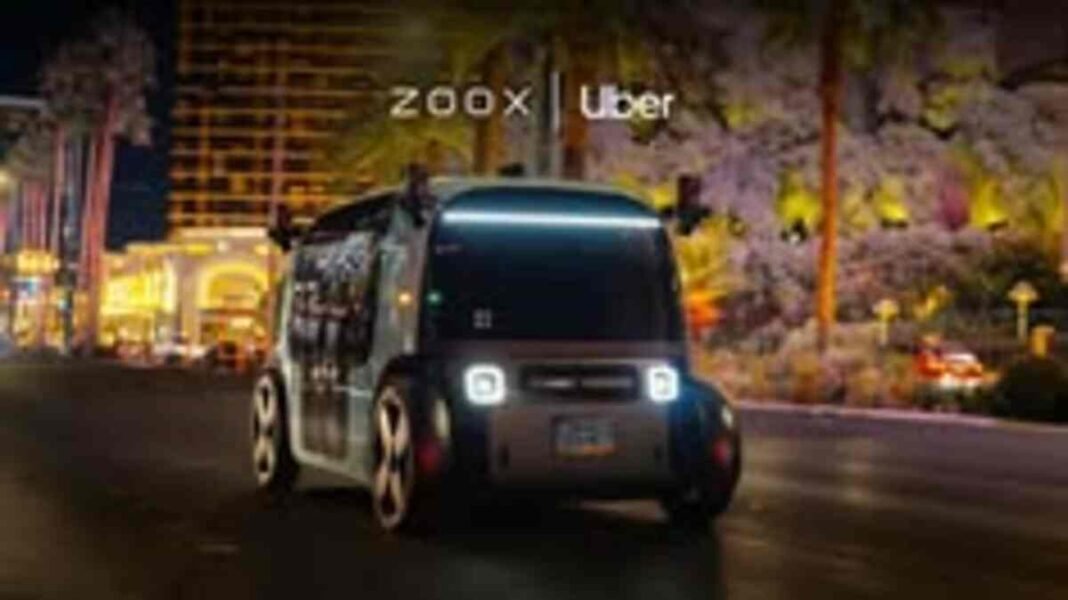
The idea of robotaxis has been tantalizingly close for years, held back by testing regulations and the ever-present human behind the wheel. That obstacle was removed this week when Amazon’s Zoox became the first ever in the United States to get federal approval to operate paid commercial services in vehicles that were designed from the ground up to be steerless, pedal-less, humanless. The National Highway Traffic Safety Administration (NHTSA) granted Zoox a temporary waiver from a number of historic vehicle safety standards that were written for automobiles built assuming a driver would always be behind the wheel. The exemption will allow the company to operate as many as 2,500 specially-designed robotaxis a year for the next two years.
Zoox is already operating a small pilot fleet of paid robotaxis in certain parts of Las Vegas and San Francisco. With the exemption, it will be able to begin charging fare, provided regulatory approval is obtained from the relevant state and local authorities. The company has stated its intention to bring a paid service to Vegas first.
What makes the exemption unique is the vehicle, which Zoox designed from the ground up. Instead of removing the driver from an ordinary car, they created a small battery-powered pod purpose-built to be operated exclusively in driverless mode. Its interior, where passengers face each other, resembles a silent streetcar. There is no dashboard of controls because the system does not require any. The regulator found the system performance on driver performance and safety to be to the same standard, or higher, as traditional vehicles even without all of the hardware. Though, the exemption was granted with careful use conditions so the agency can closely track system performance in operational conditions and rescind permission if significant safety problems materialize.
This milestone comes at a time when the autonomous ride business is moving from trial phases into more made-for-mass-consumption forms of transportation. Waymo has paid customers already riding in altered vehiclesstill equipped with the old pedals and wheels just in case. Zoox’s approach makes for a different case, and a different regulatory evolution. Approving a vehicle that was never meant to contain a human driver indicated that the rules are starting to catch up. The practical distinction for now will be invisible for the passengers. Where they would have been willing to venture into the untested on a new venture, they are now able to use the vehicles in the same way as any other trip.
The vehicles will remain be running in targeted areas while the entity expands its knowledge, but ride safe, and keep distance from them, since safety is the priority. Temporary suspension is indicative of their level of caution, and should the drivers not provide the promised results, officials have made it known they are ready to revoke the permission. Hidden within this regulatory language is a more fundamental tale of how cities may someday reallocate travelers.
Robotaxis offer lower costs, more predictable availability, and the elimination of chauffeur-driven mishaps for innumerable daily journeys. They generate concerns about jobs, roads, and whatits like to travel in a car that driveesthink. Zoox’s approval doesn’t resolve these broader issues, but it does make them more tangible.
