

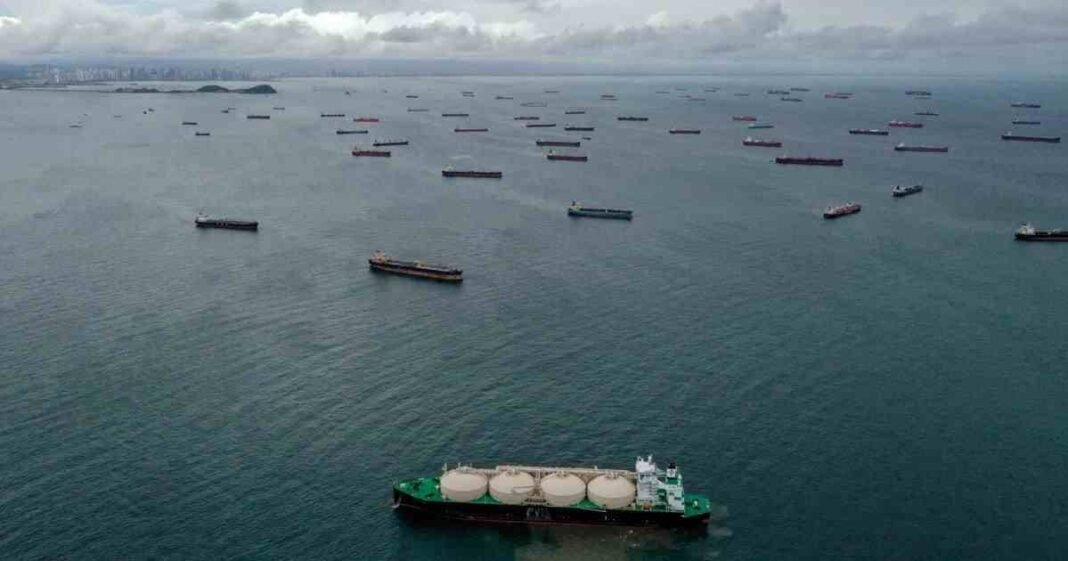
The Panama Canal is experiencing a rare cocktail of geopolitical embattlement and environmental disturbance, pushing the price of guaranteed passage onward sharply upwards and posing new headaches for the World shipping industry. As ships reroute away from war-torn waters and water levels decline in the canal system, shipping firms fight to secure scarce capacity along one of the world’s most critical trade arteries. As of August, transit slot prices have reached historic heights.
Shipments in daily auctions for passage through the Panama Canal currently average approximately $1.1 milliona figure more than 16 times higher than the average for the same period one year prior, as a recent update in the shipping industry. For larger vessels requiring passage via the canal’s Neopanamax locks, auction prices have climbed to approximately $2.
5 million, and there are reports of at least one vessel having paid roughly $4 million to move to the front of the line. The rise is also partly attributed to the ongoing turmoil from Iran war. The war has led to a significant decrease in the shipping capacity through the strategic passage of the Strait of Hormuz.
As costs and risks become more unaffordable on the conventional routes, there is an increase in cargo owners looking at other routes, like the Panama route. The channel offers a significant shortcut between the Atlantic and the pacific. For vessels sailing between various portions of Asia and the east coast of North America, the canal allows one to bypass A lot longer paths down around the tip of South America.
That benefit is even greater when other important transport channels are closed. But Panama is facing its other problem at precisely the wrong time. Drier weather and falling water levels in Gatun Lake, the freshwater source for the canal’s locks, are attributable to El Nio.
Large ships moving through the canal use gargantuan amounts of fresh water, and water levels Because of this determine which ships and how much load they can carry on their route. The Panama Canal Authority has imposed these restrictions: Bookings or transit days per shipper were limited to 34 instead of 36 daily from late July, and also restrictions related to draft levels have been imposed. Experts state that further restrictions are very likely if the water level drops even more.
For this reason, the administration has been planning ahead for a potential return to another painful drought after the hard limits imposed last time around with the El Nino period. During the 2023-24 drought the daily canal transits seasonally collapsed as regulators sought to reduce water use. This situation has Because of this re-activated fears that climate changes leading to water shortages could soon become an endemic feature for the vital waterways.
The impact is already reaching ship owners and their clients. Carriers are starting to impose new surcharges to cover the increased cost arising from the Panama Canal. Hapag- Lloyd, for example, announced a surcharge of US$130 per TEU on some sailings to commence from 15 August.
