

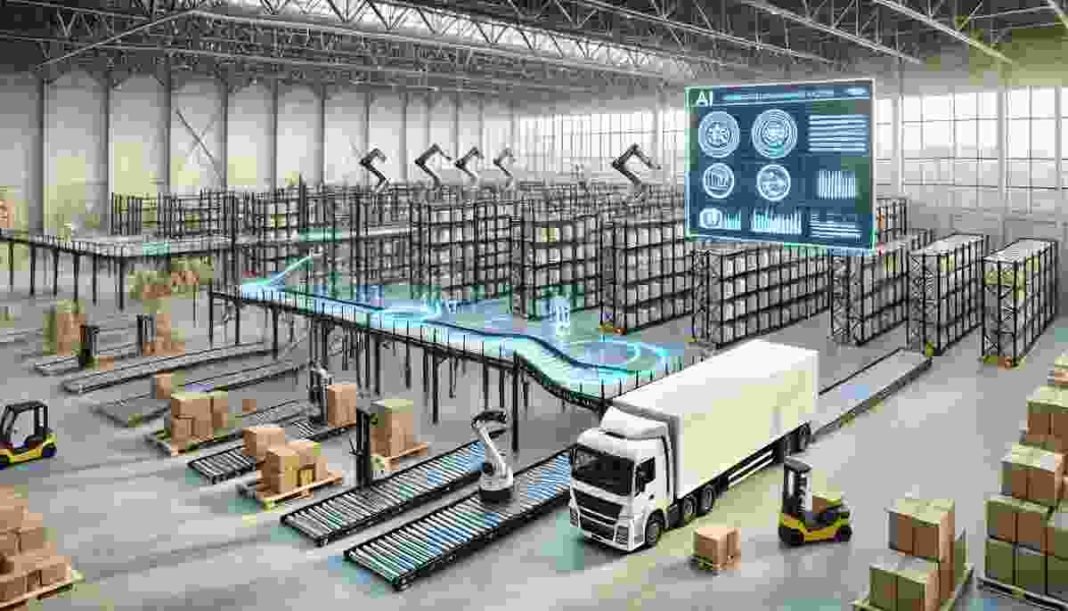
Amazon is significantly expanding its use of AI-powered warehouse robotics across the United States and Europe, signaling a major shift in how global e-commerce logistics are managed. The move comes as the company faces rising labor, fuel, and transportation costs, while customer expectations for faster delivery times continue to increase.
Over the past year, Amazon has accelerated the deployment of intelligent robots capable of performing tasks that were once handled entirely by human workers. These robots are designed to transport inventory, assist in sorting packages, and optimize picking routes inside fulfillment centers. Unlike earlier automation systems, the new generation of robots relies heavily on artificial intelligence and machine learning, allowing them to adapt in real time to changing warehouse conditions.
The expansion is part of Amazon’s broader effort to make its logistics network more efficient and resilient. With same-day and next-day delivery becoming the standard rather than a premium service, the pressure on fulfillment centers has intensified. AI-driven robotics allow Amazon to process higher order volumes without proportionally increasing labor costs, a critical advantage in a competitive and inflation-sensitive market.
Rising logistics costs have been a key driver behind this investment. Global supply chain disruptions, higher fuel prices, and increased wages have squeezed margins across the retail sector. By automating repetitive and time-consuming tasks, Amazon aims to reduce operational expenses while maintaining speed and reliability. Internal estimates suggest that robotics-assisted warehouses can cut order processing times significantly, especially during peak shopping seasons.
The new robotic systems are more collaborative than previous models. Instead of replacing workers, many robots are designed to work alongside them, handling physically demanding or monotonous tasks. This approach not only improves efficiency but also reduces workplace injuries, a long-standing concern in large-scale fulfillment operations. Amazon has stated that the technology allows human workers to focus on higher-value tasks such as quality control and exception handling.
In Europe, where labor regulations and costs are generally higher, AI-powered automation plays an even more strategic role. Amazon has been upgrading existing fulfillment centers while designing new facilities around robotics-first layouts. These warehouses use advanced AI software to coordinate thousands of robots simultaneously, ensuring smooth traffic flow and minimizing downtime. The result is faster order fulfillment with fewer bottlenecks, even during demand spikes.
Data plays a central role in this transformation. AI systems continuously analyze order patterns, inventory movement, and delivery routes to predict demand and pre-position products closer to customers. This predictive capability reduces last-mile delivery distances, which are among the most expensive parts of the logistics chain. Shorter routes translate directly into faster deliveries and lower transportation costs.
The expansion also reflects a broader industry trend toward intelligent automation. As consumer behavior shifts toward instant gratification and on-demand services, retailers are under pressure to modernize supply chains. Amazon’s scale allows it to invest heavily in proprietary robotics and AI platforms, setting a benchmark that competitors are struggling to match.
However, the move has not been without criticism. Labor groups and regulators continue to scrutinize the impact of automation on jobs and working conditions. Amazon maintains that robotics expansion creates new roles in technology maintenance, system oversight, and operations management. The company has also launched training programs aimed at reskilling employees for these evolving positions.
From a business perspective, the long-term benefits are clear. Faster delivery times strengthen customer loyalty, while improved efficiency protects margins in an increasingly competitive e-commerce landscape. AI-powered robotics also give Amazon greater control over its supply chain, reducing reliance on external logistics providers and mitigating future disruptions.
Looking ahead, Amazon is expected to deepen its investment in autonomous systems, including more advanced robotic arms, vision-based picking technology, and AI-driven forecasting tools. These innovations could further compress delivery timelines and redefine fulfillment standards globally.
Amazon’s expansion of AI-powered warehouse robotics marks a critical step in the evolution of modern logistics. As rising costs and customer expectations collide, automation is no longer optional—it is becoming the foundation of scalable, future-ready commerce. For Amazon, this strategy reinforces its position at the forefront of retail innovation, setting the pace for how goods move from click to doorstep in the digital age.
