

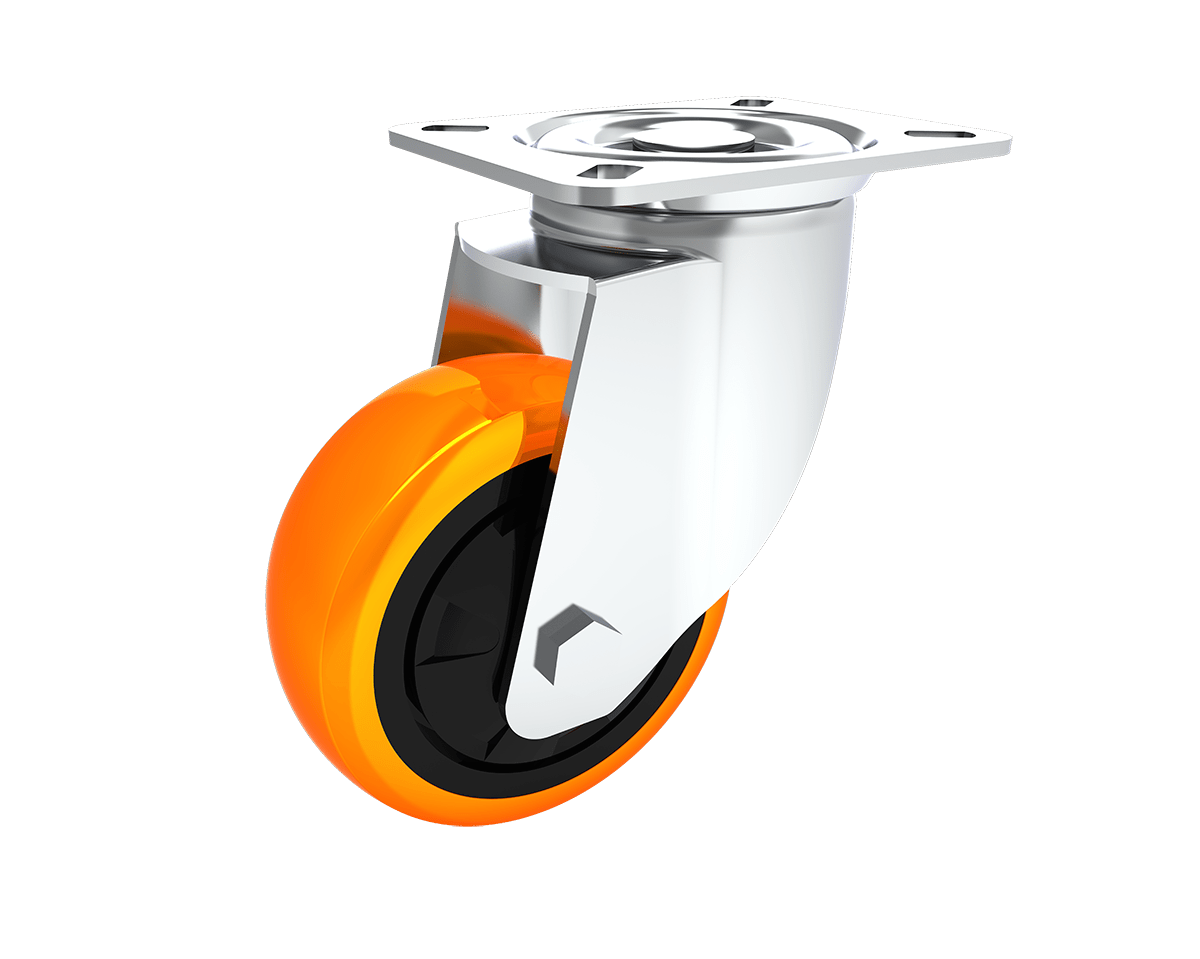
Caster failure can have severe repercussions in industrial settings. No company wants to make any of the potential outcomes, such as production halts that reduce profit margins or worker injuries and the resulting insurance claims.
When creating the specs for your industrial caster applications, it makes sense that it is essential to take the environment into mind. Although casters have built-in safety precautions designed specifically for the majority of heavy duty applications, improper handling can still result in failures. We’ll go over some of the most frequent causes of caster failure to help you avoid it.
Please be aware that in some circumstances, when temperatures rise beyond 100°F, caster wheels may not function. Because softer materials, like rubber and plastics, have a tendency to flat spot or even melt under certain conditions, wheel material becomes troublesome at this temperature. Depending on the temperature, the type of grease you use for castor wheels may change. If the incorrect type of grease is used, it will melt and disintegrate. Put another way, this raises the possibility of bearing failure because the heavy-duty casters won’t be completely greased. In order to select the best one for your needs, it is essential to speak with a respected caster wheel manufacturer.
It is essential to keep in mind that every castors has a capacity rating. The castors will eventually fail when the load surpasses the specified rating. To account for shock loads, rock loads, or a load sufficient floor in G, you should use heavy duty castors with a capacity greater than your calculation. Caster failure is the result of uneven loading when one caster is designed to support a substantially larger percentage of the weight. The end result of increasing the impact load is premature caster wear or failure.
The performance of heavy duty trolley wheels can be impacted by a number of important circumstances, including abnormally high or low temperatures. Certain castor materials are prone to rust, moisture, and dirt damage. As a result of rocky terrain, the caster may absorb significant impact loads and brinelling, or load indents. It is essential to select casters that offer trolley in heavy duty features including shock absorption, durability, and corrosion while transporting wheels across uneven terrain or gruel. These issues are addressed by Comfort Castors’ whole line of casters.
These are some of the most frequent causes of industrial caster failure. But don’t worry, you can easily avoid making these mistakes. Understanding exactly what type of environment your casters will be working in is the objective. In order to make your application successful, this information will ultimately assist you in selecting the appropriate caster type and size.
Make sure you select a trustworthy Indian caster wheel manufacturer who offers quality assurance on all of their products. And Comfort Castors is the best spot to look for trolley wheels. Because our products are built in compliance with worldwide standards for performance, durability, and safety, they provide dependable and effective mobility solutions for a range of industries and applications. For more information, look at this link.